Home

News & Events
EU manufacturing policy: what FP10, the EU budget and the Industrial Accelerator Act mean for Europe’s manufacturing community
EU manufacturing policy: what FP10, the EU budget and the Industrial Accelerator Act mean for Europe’s manufacturing community
23.11.2026
News
Between now and early December, the EU takes three decisions that will shape European manufacturing research and industrial policy until 2034. The European Parliament votes on its position for the next research framework programme (FP10). EU leaders meet to try to agree the 2028–2034 budget. MEPs vote in committee on the Industrial Accelerator Act. Here is where each file stands, and what it means for the Made in Europe community.
FP10: Parliament sets out its position
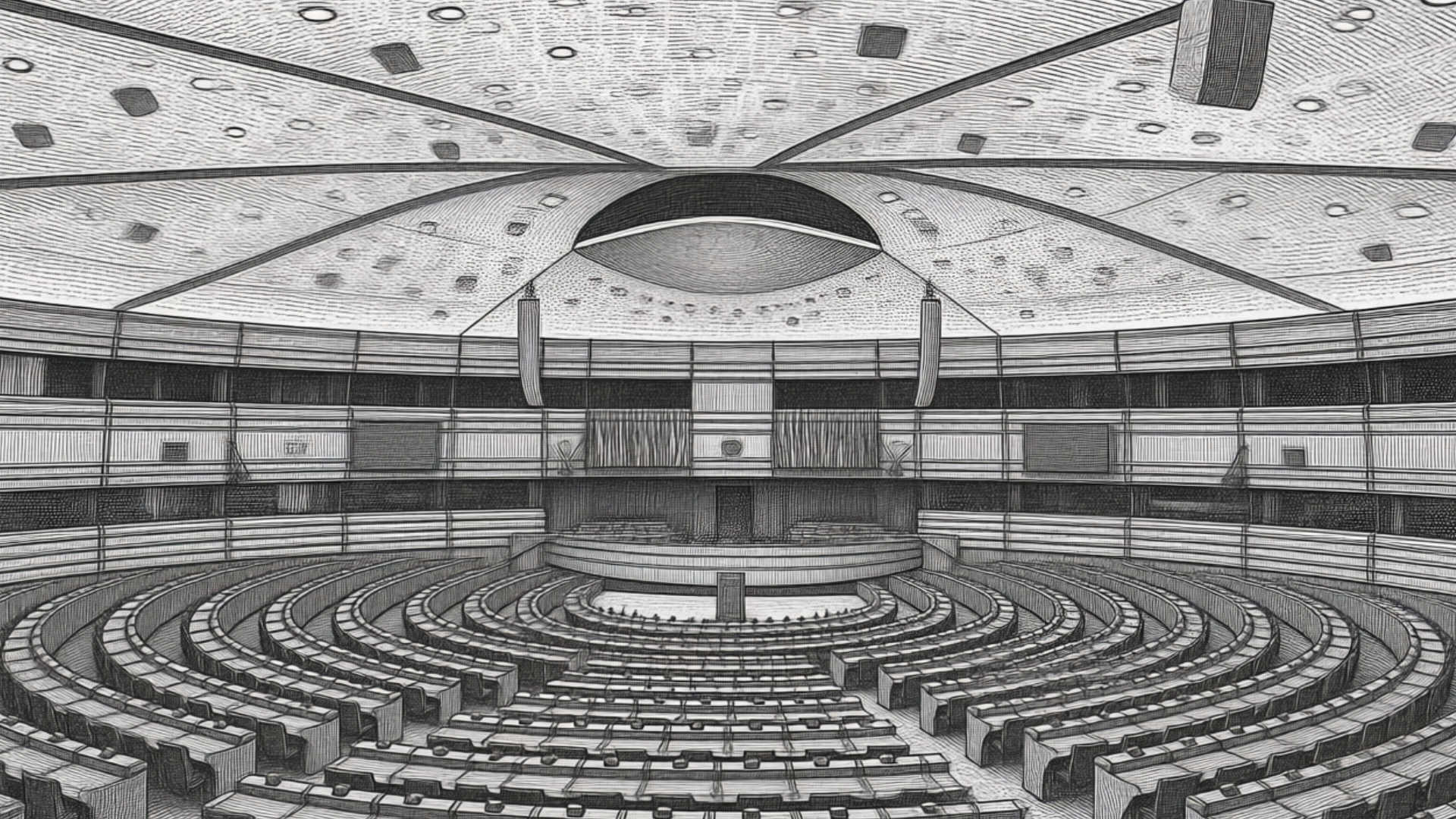
On 10 November, the Parliament’s Committee on Industry, Research and Energy (ITRE) adopted its negotiating position on FP10 and the European Competitiveness Fund (ECF). It repeats Parliament’s call for a €200 billion FP10, above the €175 billion the Commission proposed. The plenary vote is scheduled for the week of 23 November (ERA-LEARN, Horizont Evropa).
Several changes in the ITRE text matter directly for European Partnerships such as Made in Europe:
- A cap on numbers: no more than 35 European Partnerships at any one time.
- A shared agenda: each partnership would rest on a Strategic Research, Innovation and Deployment Agenda (SRIDA) backed by substantial budget commitments. An earlier proposal for a minimum €2 billion EU contribution per partnership was dropped.
- New governance: an independent High-Level Council would advise on partnership areas and on the direction of collaborative research. The Commission would report on partnership performance every two years.
- Links to the ECF: collaborative research stays under Horizon Europe’s own rules, while partnership bodies could also implement funds from other EU programmes, opening a route to deployment.
The Council adopted its own partial position in June. It keeps partnerships as an important instrument but wants a smaller, competitively selected portfolio. Member States would play a stronger role from the start, and partnerships would involve public entities from at least 10 Member States. The Council also sees the ECF supporting deployment, with its work programmes able to contribute to FP10 partnerships. Once Parliament votes, negotiations between the three institutions can begin.
The EU budget: research funding under pressure
The final size of FP10 and the ECF depends on the 2028–2034 Multiannual Financial Framework (MFF). On 21 November, European Council President António Costa presented a revised compromise that keeps €158 billion (current prices) for FP10. That is €17 billion below the Commission’s proposal and €42 billion below Parliament’s call (CASRAI).
The proposal cuts the overall budget by €204 billion compared with the Commission’s July 2025 plan. Competitiveness, defence and external action again take the largest share of the cuts. The budget heading covering industrial competitiveness and innovation falls to €437.6 billion, down 16.2% on the Commission’s proposal (Agence Europe).
EU leaders will discuss the proposal at a special European Council on 26–27 November (Council of the EU). The research community is pushing back: by mid-November, 81 Nobel laureates had signed an appeal for an FP10 of at least €200 billion (CASRAI).
Industrial Accelerator Act: “Made in EU” takes shape
The Commission proposed the Industrial Accelerator Act (IAA) in March 2026. It aims to raise manufacturing’s share of EU GDP from 14.3% in 2024 to 20% by 2035 (European Parliament). Its main tools are:
- “Made in EU” and low-carbon requirements in public procurement and public support schemes, starting with steel, cement, aluminium, vehicles and net-zero technologies
- conditions on foreign direct investment in emerging strategic sectors
- Industrial Manufacturing Acceleration Areas to develop clusters
- faster permitting for industrial manufacturing projects
The file is contested. More than 5,000 amendments were tabled in Parliament, and the committee vote is planned for 1 December (Publicea). The lead MEPs want trade partners to opt in to the “Made in Europe” rules by meeting criteria written into the law, rather than opening the scheme to all free-trade partners as the Commission proposed (Borderlex). The Council has not yet agreed its position, and adoption is not expected before 2027.
One point for our community: robotics and autonomous systems were dropped from the “Made in Europe” procurement scope (Advanced Manufacturing Transition Pathway). EFFRA covered the proposal in more detail in an earlier article.
Open calls
Industrial AI and robotics remain high on the Commission’s agenda. Its Apply AI Summit on 17 November in Brussels included dedicated sessions on AI in manufacturing and on AI and robotics (Europe–China Robotics Association). The Commission has also said it will propose “a solid programme for robotics” before the next MFF starts in 2028 (Science|Business). A new Commission study on digital research priorities for 2028–2034 will inform the digital strand of FP10 (euRobotics).
Under the current Horizon Europe, the 2027 Cluster 4 one-stage industry call has around €224 million available. It includes three Made in Europe topics (FFG):
- HORIZON-CL4-2027-01-MAT-PROD-02: Advanced manufacturing for key products (IA)
- HORIZON-CL4-2027-01-MAT-PROD-03: Factory processes and automation for de- and re-manufacturing (RIA)
- HORIZON-CL4-2027-01-MAT-PROD-06: Circular innovative advanced materials, from design to markets (RIA, with the IAM4EU partnership)
Deadlines are on the Funding & Tenders Portal.
What this means for the Made in Europe community
Together, these decisions will set the conditions for the next Made in Europe Partnership: how much funding there is, how partnerships are selected and governed, and how research connects to deployment through the ECF.
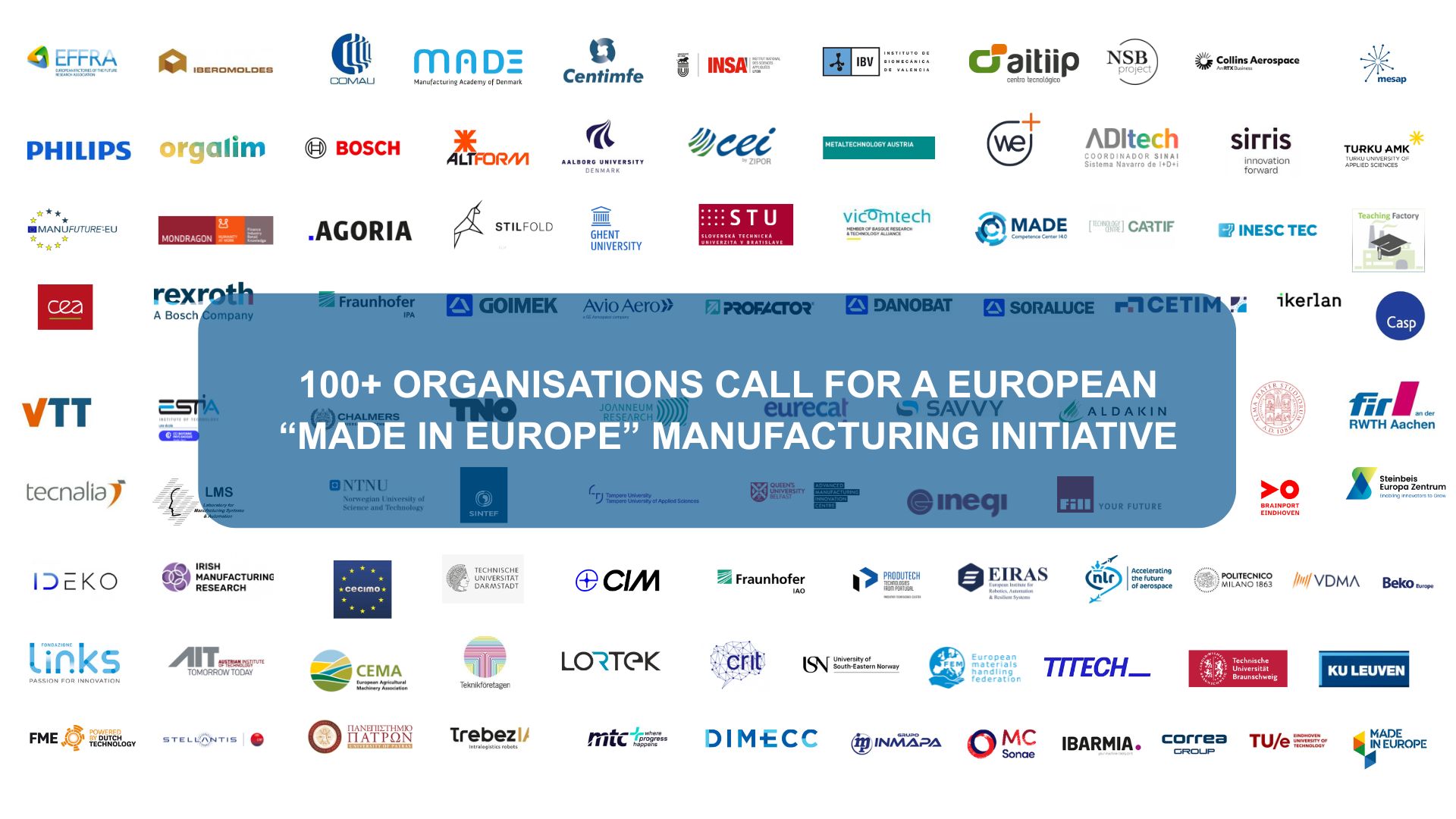
The proposed shift to Strategic Research, Innovation and Deployment Agendas fits the direction EFFRA has been working towards. EFFRA is preparing its Advanced Manufacturing SRIDA for FP10 and the ECF. More than 100 organisations from industry, research and academia have also backed EFFRA’s call for a coordinated, large-scale “Made in Europe” Manufacturing Initiative, embedded in both instruments.
EFFRA will keep following the negotiations and will update members as the institutions reach their positions.
Key dates
| Date | What happens |
|---|---|
| Week of 23 November 2026 | European Parliament plenary vote on its FP10 position |
| 26–27 November 2026 | Special European Council on the 2028–2034 EU budget |
| 1 December 2026 | Parliament committee vote on the Industrial Accelerator Act |
Share: