

EFFRA Day Trip to Kortrijk: A Journey into the Heart of Collaborative Innovation
29.10.2025
News
Yesterday, the EFFRA secretariat had the opportunity to visit Kortrijk’s newly developed Valley, an emerging innovation ecosystem designed to bring together industry, research, and education in a tangible way. The day was filled with inspiration, collaboration, and forward-looking discussions about how Europe’s industrial landscape can evolve toward greater innovation, productivity, and societal welfare.
An Ecosystem Built for Co-Creation
This Valley is taking shape as a co-creation corridor that unites multiple institutions, including Agoria, Flanders Make, Howest University, KU Leuven, and the University of Ghent. Together, they aim to make innovation accessible and practical for companies of all sizes: from start-ups to established manufacturers.
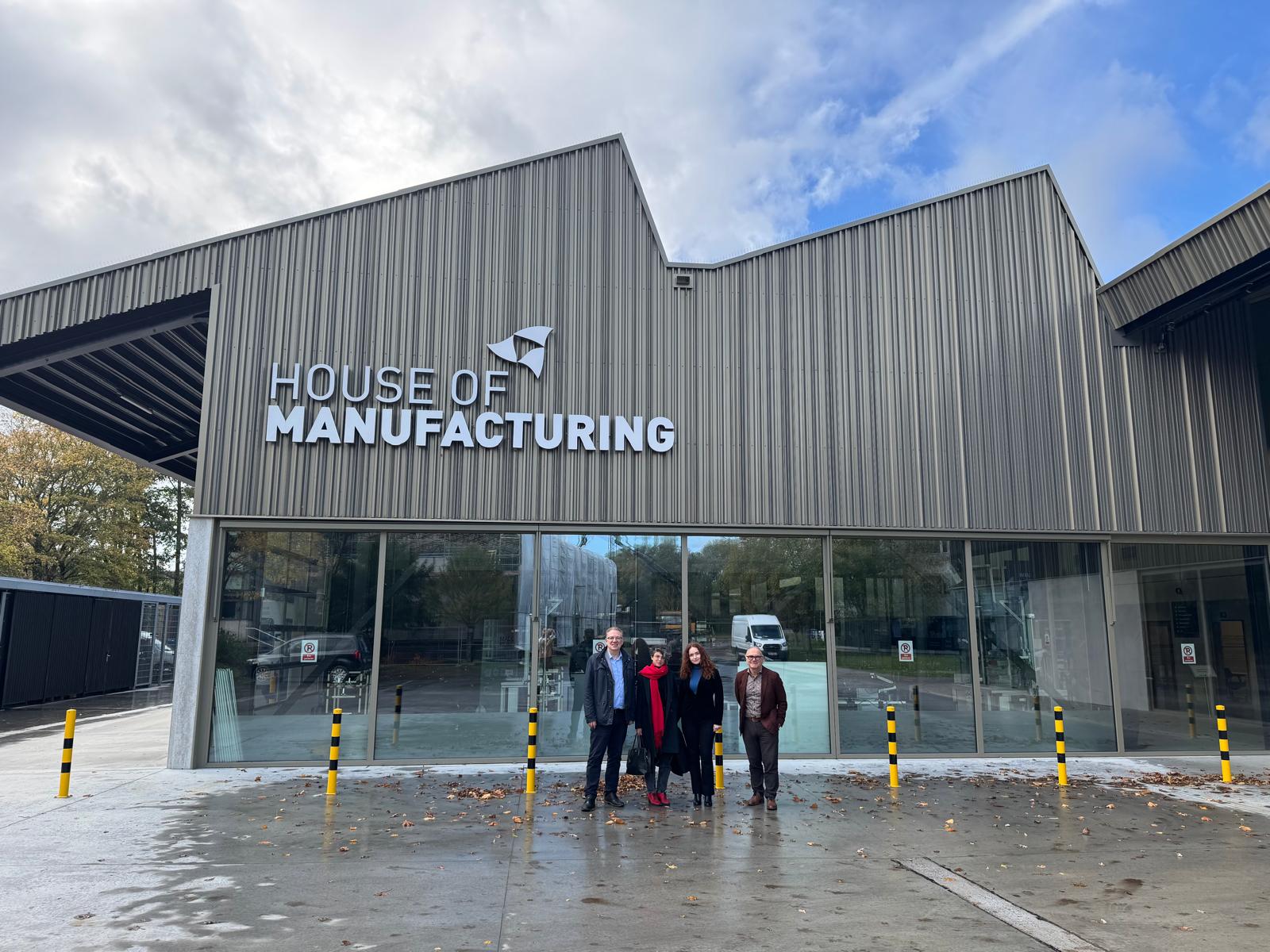
The day began with an engaging presentation at Agoria, led by Ben Van Roose, who outlined how Agoria connects technology companies with research partners, public authorities, and educational institutions. Agoria’s House of Manufacturing served as our first stop, a collaborative hub operated with Sirris, where companies can explore and adopt Industry 4.0 technologies in a practical, hands-on environment. Learn more about the House of Manufacturing.
Co-Creation at Flanders Make
Next, we visited Flanders Make’s new top technology centre in Kortrijk, a state-of-the-art facility focused on co-creation for Industry 4.0 production systems. The centre provides an open environment where companies can test new technologies such as digital twins, smart robotics, and advanced automation, often in close collaboration with academic partners.
This is more than a testing ground: it’s a living lab for industrial transformation, where the human operator remains central to the “Factory of the Future.” A special thanks to Kurt De Weirdt, who gave us the tour.
Howest University and the Academic Connection
Our final stop was Howest University, which demonstrated how education and applied research are seamlessly integrated into this ecosystem. Alongside KU Leuven and UGent, Howest plays a vital role in preparing the next generation of engineers, designers, and innovators. Through hands-on learning, student projects, and direct collaboration with local companies, these institutions ensure that innovation is not confined to labs; it’s happening in real workplaces.
A Tangible Model of Regional Innovation
What makes Kronijen Valley so inspiring is its clear and shared purpose:
“Help, co-create, and innovate with local industries to stay competitive and at the front of global innovation.”
This vision is not just rhetoric it’s visible everywhere. From high schools to universities, from start-ups to established manufacturers, everyone is working together toward a sustainable, digital, and human-centered industry.
Key Takeaways
-
Collaboration works best when it’s place-based: Kronijen Valley demonstrates that co-location of academia, industry, and research creates real synergies.
-
Innovation must include people: The role of education and talent development is central to sustainable industrial growth.
-
Digital transformation requires shared infrastructure: Facilities like the House of Manufacturing and Flanders Make accelerate technology adoption for all.
-
Regional innovation is Europe’s strength: Local ecosystems like Kortrijk are essential building blocks of Europe’s wider industrial strategy.
The EFFRA day trip to Kortrijk offered not only a glimpse into the future of European manufacturing but also a model for how innovation ecosystems can thrive. It showcased that collaboration, openness, and shared vision can transform regional industry making it smarter, greener, and more resilient.
EFFRA thanks Agoria, Flanders Make, Howest University, KU Leuven, and Ghent University for their hospitality and for sharing their inspiring initiatives.
Let’s continue building bridges between research, industry, and education to ensure Europe remains at the forefront of advanced manufacturing and digital innovation.
Share: